Why Email Is No Longer a Secure Way to Exchange Sensitive Documents
Introduction
For decades, email has been the default way professionals exchange documents with clients, partners, and employees. Contracts, financial records, identification documents, payroll information, and other sensitive files are frequently shared as email attachments.
While this workflow is simple and familiar, it was never designed with modern cybersecurity risks in mind. As phishing attacks and account compromises become more frequent, organizations are increasingly questioning whether email is still an appropriate channel for transmitting confidential information.
For professionals who regularly handle sensitive data, relying on traditional email attachments can expose both the organization and its clients to unnecessary risk.
Email Was Never Designed for Secure Document Exchange
Email was originally created as a communication protocol, not as a secure file transfer system.
When sensitive documents are sent as attachments, the sender loses visibility and control over how those files are stored, forwarded, or accessed.
Once a document is delivered through email, it may easily be:
- forwarded to unintended recipients
- stored indefinitely in inboxes
- downloaded without any audit trail
- accessed if an email account becomes compromised
In many cases, years of confidential attachments remain stored in mailboxes, creating a significant exposure if those accounts are breached.
The Hidden Risks of Email Attachments
Many data breaches originate from everyday document sharing practices.
Several risks are often overlooked:
Forwarding without control
Email attachments can easily be forwarded outside the intended recipient group without the sender's knowledge.
Long-term storage in inboxes
Sensitive documents can remain accessible for years in email archives.
Phishing exploitation
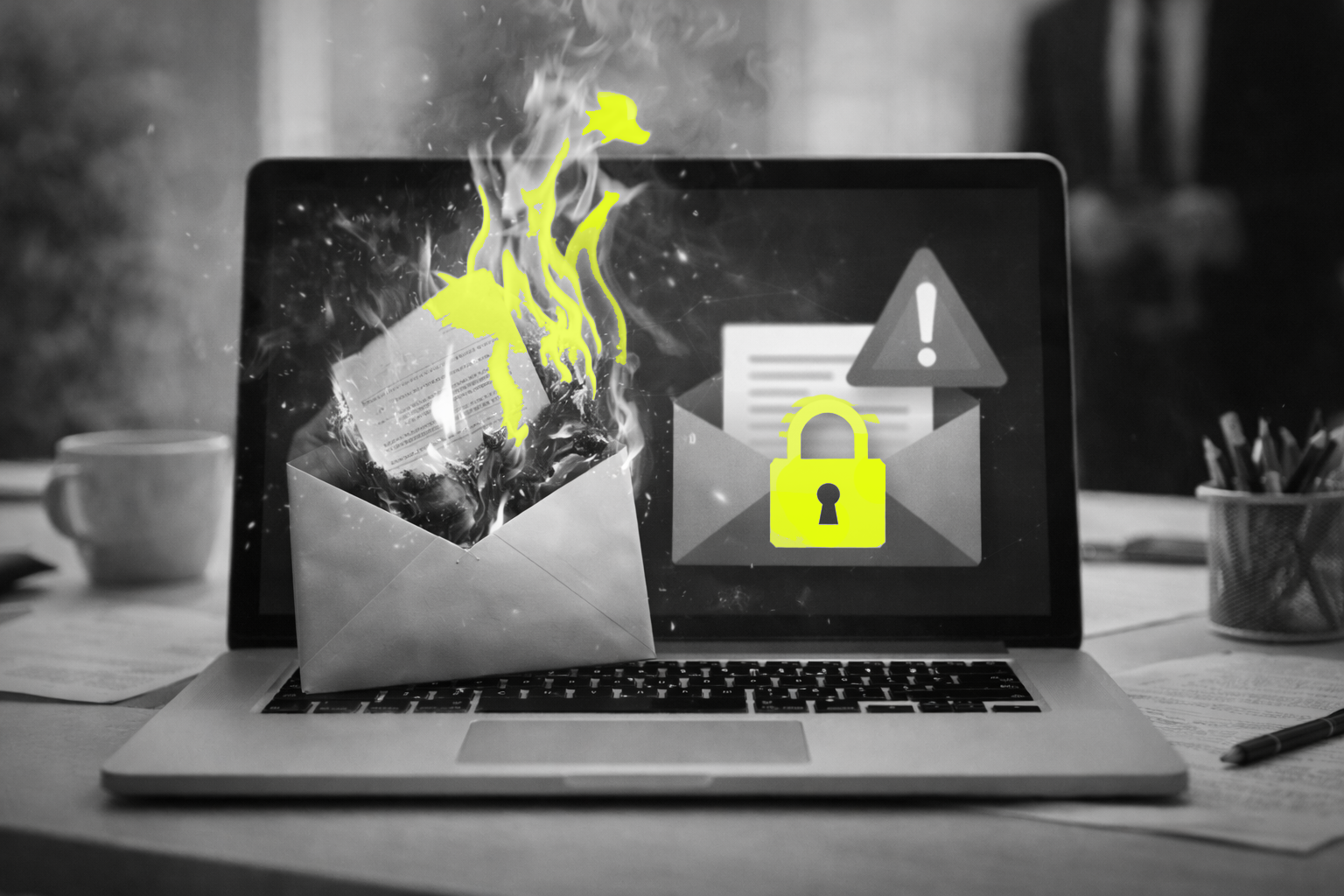
Attackers frequently send fraudulent document requests that appear to come from trusted contacts.
Why Shared Links Are Not Always Safer
Some organizations attempt to mitigate email risks by sending cloud storage links instead of attachments.
While this can improve accessibility, shared links often introduce their own vulnerabilities.
If access permissions are misconfigured, links that allow access to “anyone with the link” may easily be forwarded to unintended recipients.
Without strong authentication, it may be impossible to verify the identity of the person accessing the document.
What Secure Document Sharing Should Look Like
Modern document exchange solutions introduce stronger security mechanisms designed specifically for sharing confidential information.
Key capabilities often include:
- encrypted document transmission
- controlled access links
- strong authentication for document access
- detailed audit logs
- automatic document expiration policies
These features allow organizations to maintain control over sensitive documents throughout the sharing process.
Conclusion
As organizations handle increasing volumes of confidential information, traditional email attachments are becoming an increasingly risky way to exchange documents.
Secure document sharing solutions allow professionals to maintain control over sensitive files while reducing the risk of phishing attacks and unauthorized access.
Platforms such as doclinc enable professionals to securely send and receive documents through authenticated access links integrated directly with familiar email workflows.
Frequently Asked Questions
Is sending documents by email secure?
Email can be convenient, but it was not designed as a secure document transfer method. Attachments can be forwarded, stored indefinitely, or accessed if an email account is compromised. For sensitive documents, many organizations now use secure document sharing platforms instead of email attachments.
What is the safest way to send confidential documents?
The safest approach is to use a secure document sharing system that provides encrypted transmission, identity verification, and access tracking. These solutions allow organizations to control who can access documents and for how long.
Why are email attachments risky for businesses?
Email attachments can be forwarded outside the intended recipient group and are often stored in inboxes for long periods of time. If an account is compromised, attackers may gain access to years of stored confidential files.
What should businesses look for in a secure document sharing solution?
A secure document sharing platform should include encrypted transmission, strong authentication, document access tracking, and automatic expiration policies.